You Won't Believe These Hidden Gems in Dahab's Desert Architecture
Tucked between the Sinai Mountains and the Red Sea, Dahab feels like a secret the world hasn’t fully discovered. I wandered its lanes expecting beaches and dive shops—but was stunned by the soulful, hand-built structures rising from the sand. These aren’t just homes or cafes; they’re quiet masterpieces blending Bedouin tradition with desert creativity. If you think Egyptian architecture is only pyramids and temples, wait until you see Dahab’s hidden architectural heartbeat. Here, design doesn’t shout for attention. Instead, it whispers through arched doorways, shaded courtyards, and walls built from the very earth beneath your feet. This is architecture not as spectacle, but as harmony—a dialogue between people, climate, and culture that unfolds slowly, gracefully, and with deep intention.
Discovering Dahab: More Than a Beach Town
Dahab is often described as a laid-back diving village nestled along the eastern coast of the Sinai Peninsula in Egypt. Known for its turquoise waters, coral reefs, and relaxed pace, it has long drawn travelers seeking sun, snorkeling, and serenity. Yet beyond its postcard-perfect coastline lies a quieter, more enduring beauty—one that reveals itself not in sunsets over the sea, but in the curves of mudbrick walls and the rhythm of hand-laid stone. While many visitors come for the Red Sea, those who linger begin to notice something deeper: Dahab is a place where architecture breathes with the land.
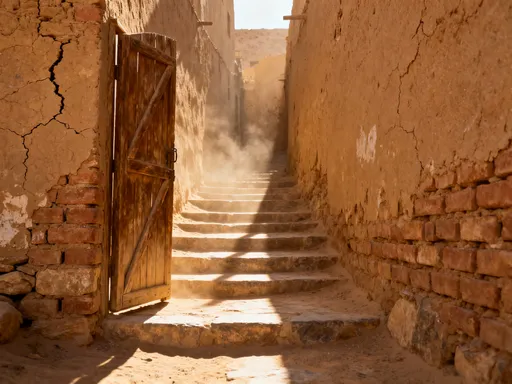
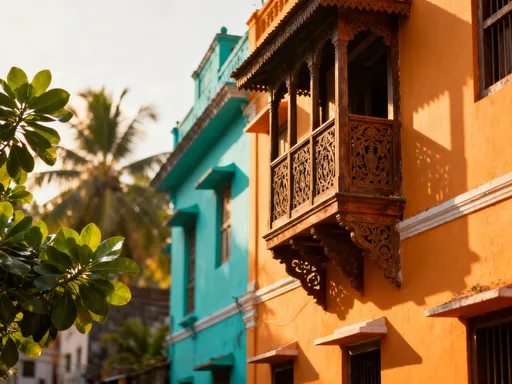
Unlike the dense, traffic-choked streets of Cairo or the monumental scale of Luxor’s ancient sites, Dahab’s built environment feels organic and intimate. There are no towering hotels or glass-fronted malls here. Instead, the town unfolds in low-rise clusters of buildings, their forms shaped by wind, sunlight, and generations of local knowledge. Streets meander rather than grid, following the natural contours of the desert floor. Colorful wooden doors—painted in cobalt, terracotta, or sage—hint at the life within, while flat roofs double as evening terraces where families gather as the heat fades.
This architectural humility is not accidental. It reflects a long-standing relationship between the people of Dahab and their environment. The town’s growth has been gradual, guided more by necessity and tradition than by master plans or commercial pressure. As a result, Dahab offers a rare example of vernacular architecture—a style born not from blueprints, but from lived experience. For the thoughtful traveler, this shift in perspective transforms a simple beach getaway into a journey of discovery, where every wall, arch, and courtyard tells a story of adaptation, resilience, and quiet beauty.
The Spirit of Bedouin-Inspired Design
At the heart of Dahab’s architectural identity is the enduring influence of Bedouin culture. For centuries, the nomadic tribes of the Sinai have lived in harmony with the desert, developing ways of building that prioritize comfort, sustainability, and respect for nature. These principles are not relics of the past—they live on in the homes, guesthouses, and community spaces of modern Dahab. The buildings here are not merely inspired by tradition; they are continuations of it, shaped by the same needs and wisdom that guided desert dwellers long before tourism arrived.
One of the most striking features of Bedouin-inspired architecture is its use of natural materials. Stone gathered from the surrounding mountains, sun-dried mudbrick, and palm wood from local groves form the foundation of most structures. These materials are not chosen for their aesthetic alone—they serve a vital function. Thick stone and mudbrick walls have high thermal mass, absorbing heat during the day and releasing it slowly at night, which helps maintain stable indoor temperatures. This passive cooling system reduces the need for energy-intensive air conditioning, making these homes naturally comfortable even in the height of summer.
Design elements like shaded courtyards, latticed windows, and narrow alleyways between buildings further enhance this climate-responsive approach. Courtyards, often centered around a small fountain or potted herbs, create cool microclimates where families can gather during the hottest hours. Wind-catchers—simple openings positioned to channel breezes—draw air through rooms without mechanical assistance. Compact layouts minimize exposure to direct sunlight, while overhanging roofs and deep eaves protect walls and windows from solar gain. These are not architectural flourishes; they are time-tested solutions to desert living, refined over generations.
What makes this tradition especially meaningful today is its quiet persistence in a world increasingly dominated by standardized construction. In Dahab, you won’t find cookie-cutter villas or imported marble finishes. Instead, you’ll see homes where the texture of hand-packed mudbrick is left visible, where wooden beams bear the marks of hand tools, and where function shapes form. This is architecture that listens—to the wind, to the sun, to the rhythm of daily life—and responds with elegance and purpose.
Architecture That Blends, Not Dominates
In an era when many coastal destinations are transformed by large-scale developments that impose rigid designs on fragile ecosystems, Dahab stands apart. Its buildings do not conquer the landscape; they converse with it. You’ll find structures that curve around boulders rather than blasting them away, rooftops that double as stargazing platforms, and facades painted in earth tones that mirror the surrounding sand and stone. This sensitivity to place is not just aesthetic—it reflects a deeper philosophy of coexistence, where human habitation is meant to complement, not compete with, the natural world.
One of the most visible expressions of this principle is the way buildings follow the land’s contours. Instead of leveling hills or filling in wadis (dry riverbeds), construction in Dahab often adapts to the existing topography. Houses step down slopes in terraces, their flat roofs becoming gardens or seating areas. Pathways wind naturally, sometimes barely wider than a person’s shoulders, encouraging slow, mindful movement. This organic growth pattern creates a sense of discovery with every turn—a feeling that the town has grown like a plant, not been planted like a signpost.
The environmental footprint of this approach is notably low. Many buildings require no heavy machinery to construct, relying instead on manual labor and locally sourced materials. Rainwater is sometimes collected in underground cisterns, and solar panels are increasingly common on rooftops, providing energy without disrupting the skyline. Waste is minimized through reuse—old fishing nets become fencing, discarded tiles become mosaics, and broken pottery finds new life in courtyard walls.
Contrast this with the all-inclusive resorts found in other Red Sea towns, where vast expanses of concrete flatten the desert and artificial lagoons displace native vegetation. In those places, the architecture often feels alien—imposed rather than integrated. Dahab, by contrast, offers a model of sustainable development that doesn’t sacrifice beauty or comfort. Its buildings don’t try to stand out; they seek to belong. And in doing so, they create a sense of peace that goes beyond the visual—it’s felt in the stillness of a shaded alley, the coolness of a stone floor, the way sunlight filters through a palm-thatch roof.
Hidden Courtyards and Unexpected Details
Walking through Dahab is an exercise in noticing the small things. At first glance, the buildings may seem simple—modest in scale, unassuming in appearance. But look closer, and you begin to see the richness of detail that defines this place. A mosaic pathway made from broken sea glass glimmers underfoot. A wooden gate, carved with geometric patterns, swings open to reveal a hidden garden. An old fishing boat, its hull weathered by salt and sun, has been repurposed as the roof of a beachside café, its curved frame creating a natural canopy.
These are not decorative afterthoughts. They are expressions of creativity, resourcefulness, and cultural memory. In a place where imported goods can be expensive and hard to transport, local builders have long relied on what is at hand. This necessity has given rise to a kind of improvisational artistry—one that values character over perfection, storytelling over symmetry. Every repurposed object, every handmade tile, carries the imprint of its history and the hands that shaped it.
Take, for example, the family-run guesthouses tucked into quiet corners of the town. Many are built around central courtyards, where date palms sway and jasmine climbs the walls. The interiors are simple but thoughtfully arranged: low cushions for sitting, handwoven rugs in warm earth tones, and shelves displaying seashells, spices, and family photographs. Light plays a crucial role—morning sun spills across tiled floors, afternoon shadows stretch across textured walls, and at dusk, lanterns cast soft, flickering patterns on the ground. These spaces are not designed for Instagram; they are designed for living.
Even the cafes and tea houses reflect this attention to detail. One might feature a bar made from reclaimed driftwood, another a ceiling of woven palm fronds that rustles in the breeze. The furniture is often mismatched—chairs from different eras, tables of varying heights—but the overall effect is one of warmth and welcome. You don’t just drink tea here; you experience a place. The architecture doesn’t shout; it invites. It doesn’t impress; it embraces.
How Local Craftsmanship Keeps the Style Alive
The soul of Dahab’s architecture lies in the hands of its builders—local artisans, masons, and carpenters who have learned their craft not in formal schools, but through years of practice and mentorship. Skills are passed down informally, from elder to apprentice, often within families. There is no rigid curriculum, no certification required—just a deep understanding of materials, climate, and tradition. These craftsmen don’t follow architectural plans in the conventional sense; they read the land, listen to the wind, and build with intuition as much as knowledge.
One of the most remarkable aspects of this craftsmanship is its rejection of industrial perfection. Walls are rarely straight; corners are not always square. But these ‘imperfections’ are not flaws—they are features. They speak of a process that values authenticity over uniformity, human touch over machine precision. A slightly crooked doorframe might allow just the right amount of airflow. A wavy wall might catch the light in a way that flat surfaces cannot. In Dahab, beauty is not found in symmetry, but in the subtle variations that come from handmade work.
Many of these builders use tools that have changed little over decades—trowels, chisels, wooden molds for shaping bricks. Heavy machinery is rare, and imported materials are often avoided unless absolutely necessary. This approach not only keeps construction costs low but also ensures that buildings remain rooted in their context. When a wall is made from local stone, when a roof is supported by palm beams, the structure becomes part of the ecosystem, not separate from it.
Supporting these artisans is essential to preserving Dahab’s architectural identity. As tourism grows, there is increasing pressure to modernize, to adopt faster, cheaper construction methods. But those who choose to work with local craftsmen—whether building a home or restoring a guesthouse—help sustain a living tradition. They invest not just in bricks and mortar, but in cultural continuity. Each new structure becomes a link in a chain that stretches back generations, a testament to the enduring value of handmade, place-based design.
Why This Matters in Modern Travel
In an age of fast travel and curated experiences, Dahab offers something different: the chance to see how people truly live. Most tourists visit Egypt to see monuments of the past—pyramids, temples, tombs. But Dahab invites you to engage with the present, to appreciate architecture not as a relic, but as a living practice. These buildings are not frozen in time; they are part of daily life. Children play in their courtyards, elders sip tea in their shade, and meals are prepared in kitchens built from mud and stone.
This kind of travel fosters a deeper connection—one that goes beyond sightseeing to understanding. When you sit in a hand-built café and learn how the roof was made from an old fishing boat, you’re not just consuming a view; you’re participating in a story. You begin to see design not as decoration, but as adaptation, as culture, as survival. This shift in perspective is powerful. It reminds us that beauty can be functional, that simplicity can be profound, and that sustainability is not a new idea—it’s an ancient one, practiced quietly for centuries in places like Dahab.
As global tourism continues to grow, there is a rising demand for experiences that feel authentic, meaningful, and low-impact. Dahab’s architecture embodies all three. It doesn’t rely on grand gestures or luxury finishes. Instead, it offers intimacy, resilience, and a deep sense of place. For the traveler seeking more than a checklist of attractions, Dahab provides a model of how to travel with curiosity, respect, and heart. It shows that the most memorable journeys are not always to the tallest peaks or the busiest cities, but to the quiet corners where culture and craft still shape the world by hand.
How to Experience Dahab’s Architectural Soul Responsibly
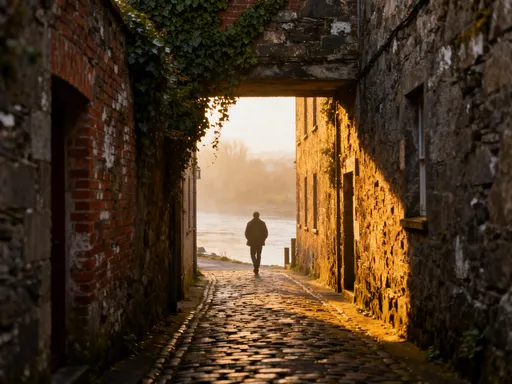
To truly appreciate Dahab’s architectural spirit, slow down. Put away the checklist. Walk without a map. Let yourself get lost in the narrow lanes where walls lean gently toward each other, where shadows shift with the sun, and where every turn reveals a new detail—a painted door, a hanging lantern, a courtyard blooming with herbs. Rushing through will only skim the surface. The depth is in the details, and the details reveal themselves only to those who look with patience and care.
Choose accommodations that reflect the town’s character. Family-run guesthouses, often built with traditional methods, offer not just a place to sleep, but a window into local life. Meals are usually shared, stories are exchanged, and mornings begin with cardamom-scented tea served on rooftops overlooking the sea. By staying in these spaces, you support local families and help sustain the very architecture you’ve come to admire.
Support local cafes and shops, especially those built with natural materials and handmade details. A simple cup of tea at a palm-thatch café does more than quench thirst—it sustains a way of building and living that is increasingly rare. Ask questions, but do so respectfully. If you see a beautiful courtyard, don’t assume it’s open to visitors. A polite inquiry goes a long way. And if the answer is no, appreciate the view from the street—privacy is part of what makes these spaces meaningful.
Photography is natural, even encouraged, but always with awareness. These are not stage sets; they are homes. Avoid intrusive shots, especially of people without permission. Instead, focus on textures, light, and form. Visit in the early morning or late afternoon, when the sun casts long shadows and softens the colors of the walls. This is when Dahab’s architecture comes alive—when the play of light and shadow reveals the depth and rhythm of its design.
Finally, carry this experience forward. Let Dahab remind you that beauty doesn’t require extravagance, that sustainability can be elegant, and that the most lasting structures are those built with care, culture, and connection to place. Travel with awareness. Leave gently. And know that in the quiet lanes of Dahab, you’ve witnessed something rare: architecture not as domination, but as harmony.
Dahab’s architecture isn’t shouted—it’s whispered through cracked stone walls and crooked doorframes that welcome the breeze. In a world chasing grandeur, this town teaches the power of quiet design. Its buildings don’t rise above the desert; they belong to it. To walk its alleys is to witness resilience, beauty, and culture—all shaped by hand, one stone at a time.