You Won’t Believe How Green Hanoi Really Is
When you think of Hanoi, bustling streets and pho stands probably come to mind—but there’s a quieter, greener side to this city. I wandered beyond the noise and discovered lakes cradled by lotus flowers, tree-lined boulevards that feel like forests, and riverside paths where time slows down. Hanoi’s natural landscapes aren’t just background scenery—they’re woven into daily life. Slowing down here isn’t a choice; it’s an invitation from the city itself. This rhythm, where nature and urban energy coexist, shapes how locals live and how visitors can truly connect. Beyond the honking scooters and narrow shop fronts lies a capital that breathes through its green spaces, offering peace not in spite of the city, but because of how it embraces nature.
The Pulse of Nature in an Urban Heart
Hanoi, Vietnam’s capital, is often described through its kinetic energy—its endless streams of motorbikes, open-air cafés, and the aroma of grilled meats curling through alleyways. Yet beneath this vibrant surface runs a deep current of green. The city is home to over 20 major lakes, more than 100 parks and green spaces, and a network of tree-lined avenues that have stood for over a century. These are not mere decorative elements; they are functional sanctuaries where residents begin their mornings with tai chi, children fly kites on weekends, and elders sip tea under banyan trees. Urban planners during the French colonial era planted wide boulevards with rows of flame trees and rain trees, creating natural canopies that still shade pedestrians today. This foresight, combined with local reverence for natural harmony, has allowed Hanoi to grow without losing its breathability.
What makes Hanoi’s green spaces so effective is their integration into everyday life. Unlike cities where parks are destinations visited on rare outings, in Hanoi, nature is part of the daily commute. A mother walks her child to school beneath arching frangipani trees. Office workers pause at lunchtime to sit by the edge of a quiet pond. The presence of greenery is not incidental—it’s intentional, preserved through generations. Even as the city expands, new developments often incorporate water features or rooftop gardens, reflecting a cultural understanding that urban life should not come at the cost of natural balance. This coexistence reduces stress, improves air quality, and fosters a slower, more mindful way of moving through the city.
For travelers, embracing this duality means shifting from sightseeing to sensing. Rather than rushing from temple to market, a more rewarding approach is to linger where nature and culture meet. This is the essence of slow travel in Hanoi—allowing the city to unfold not through a checklist, but through quiet observation. Studies on urban well-being show that even brief exposure to green spaces can lower cortisol levels and improve mood. In Hanoi, these benefits are accessible to all, not locked behind gates or entry fees. The city’s green pulse is democratic, open, and alive, inviting visitors to tune into its rhythm rather than dominate it.
Hoan Kiem Lake: More Than a Postcard
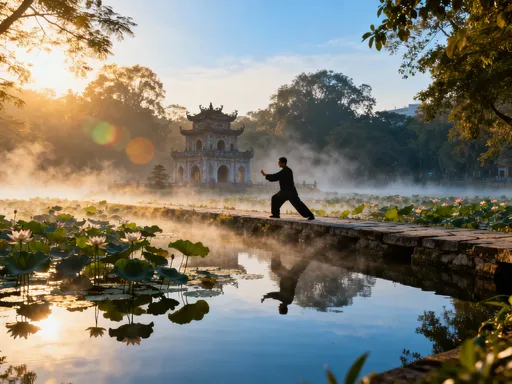
No image captures Hanoi quite like Hoan Kiem Lake at dawn. The water, still and mirror-like, reflects the soft glow of streetlamps and the silhouette of the red Huc Bridge leading to Ngoc Son Temple. Tourists often snap a photo and move on, but those who stay begin to feel the lake’s quiet heartbeat. This 12-hectare body of water, nestled in the center of the Old Quarter, is more than a scenic spot—it’s a living ritual space. At 6 a.m., the air hums with the soft movements of elderly residents practicing tai chi on the stone-paved promenade. Their slow, deliberate motions echo the lake’s calm, creating a meditative atmosphere that contrasts sharply with the city waking up around them.
The legend of the lake—named after the mythical sword returned to the golden turtle god—adds a layer of spiritual depth. Locals often pause at the temple to light incense, not just as worship, but as a moment of reflection. The scent of sandalwood mingles with the damp morning air, and the occasional chime of temple bells punctuates the silence. For visitors, this is an invitation to slow down, to observe rather than consume. Sitting on a bench with a cup of local egg coffee, one begins to notice the details: the way lotus leaves unfurl as the sun rises, the pattern of ripples when a duck glides across the surface, the laughter of children feeding bread to pigeons.
What makes Hoan Kiem Lake exceptional is its role as a communal living room. It’s where generations gather, where couples take evening walks, and where artists sketch the changing light. The city has wisely restricted motor vehicle access around the lake, creating a pedestrian-friendly zone that prioritizes human presence over speed. This deliberate design choice enhances the experience, allowing visitors to immerse themselves without distraction. To truly know Hanoi, one must spend hours here, not minutes. It’s in the stillness that the city reveals its soul—a blend of history, nature, and daily ritual that cannot be rushed.
West Lake: Where City Meets Countryside
If Hoan Kiem is the heart of Hanoi, West Lake is its lungs. Stretching over 500 hectares, it is the largest lake in the city, wrapping around the northwest like a jade-green embrace. Unlike the central bustle, West Lake offers a more relaxed, almost rural atmosphere. Its shores are dotted with ancient pagodas, floating lotus farms, and quiet lanes where bicycles outnumber scooters. This is where residents come to escape, not to another city, but to a different pace within the same one. The lake has long been a retreat for scholars, monks, and poets, and today it remains a sanctuary for those seeking peace without leaving urban life behind.
One of the most enchanting experiences here is visiting during lotus season, from June to August. The southern edges of the lake transform into a sea of pink and white blossoms, their fragrance drifting on the breeze. Local farmers harvest the flowers and leaves, using them in teas, dishes, and traditional medicine. Visitors can take a small boat ride through the lotus beds, gliding silently among the blooms. The water is calm, the sky wide, and the sense of time expands. It’s easy to forget you’re still within city limits.
Along the northern shore, quiet cafés with wooden decks hover over the water. Sitting with a cup of lotus tea, one can watch the sun dip below the horizon, painting the sky in gold and violet. Kayaking has become a popular low-impact activity, allowing visitors to explore hidden inlets and spot kingfishers diving for fish. The lake is also home to Truc Bach, a peaceful neighborhood where French-era villas have been converted into bookshops and art galleries. Here, the city feels softer, more introspective. West Lake doesn’t demand attention—it offers it gently, to those willing to receive it.
Botanical Gardens and Hidden Parks: Nature’s Quiet Corners
Beyond the well-known lakes, Hanoi harbors a network of quieter green spaces that offer solitude and discovery. The Hanoi Botanical Garden, established in the early 20th century, is one such gem. Though not as expansive as gardens in larger global cities, its curated collection of tropical and subtropical plants creates a sense of immersion. Towering banyan trees form natural arches, their aerial roots descending like curtains. Elevated walkways allow visitors to move through the canopy, offering a bird’s-eye view of ferns, orchids, and medicinal herbs. The garden is a favorite among local families, students, and photographers, yet it rarely feels crowded. Early mornings are especially serene, when mist clings to the leaves and the only sounds are birdsong and distant footsteps.
Thong Nhat Park, located near the National Convention Center, serves a different but equally important role. Once part of a larger colonial garden, it now functions as a central green lung for downtown residents. Its wide lawns, shaded benches, and small lake attract joggers, chess players, and napping grandparents. The park hosts seasonal flower exhibitions, drawing crowds without losing its peaceful character. For travelers, it’s an ideal spot to rest between visits to nearby museums or government buildings. Unlike more tourist-heavy areas, Thong Nhat feels authentically local—a place where Hanoians come to recharge, not perform.
Scattered throughout the city are smaller pocket parks, often tucked behind temples or at the end of narrow alleys. These micro-oases, sometimes no larger than a basketball court, are filled with potted plants, bamboo groves, and stone benches. They serve as breathing spaces in dense neighborhoods, where high-rises and shops dominate. Visiting these requires no itinerary—only curiosity. A simple walk off the main roads can lead to unexpected quiet. For the mindful traveler, these spaces offer a lesson in presence: beauty doesn’t always announce itself. It waits, quietly, for those who look.
Riverside Escapes: The Red River’s Gentle Pull
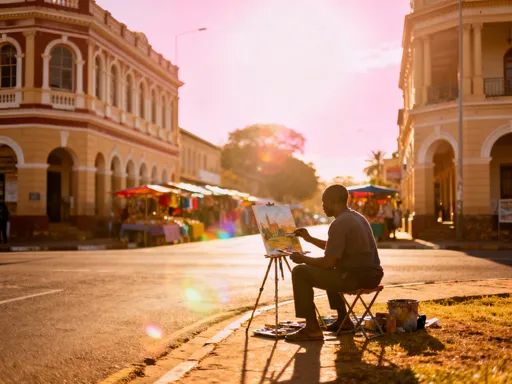
The Red River, which flows along Hanoi’s eastern edge, is both a geographical boundary and a spiritual presence. While its waters can swell during the monsoon season, its banks offer some of the city’s most peaceful retreats. Unlike the manicured shores of Hoan Kiem or West Lake, the Red River’s edges retain a wilder, more natural character. Here, the city’s noise fades, replaced by the rustle of reeds and the call of water birds. The Long Bien dike, stretching north from the historic bridge, has become an informal art zone, where local painters set up easels and students sketch the skyline. At sunset, the river glows amber, and couples stroll hand in hand along the embankment.
Further downstream, areas like Chu Ha and Long Tien reveal a different side of Hanoi—one closer to the countryside. These riverside stretches are dotted with sandbars, small fishing huts, and bicycle paths that wind through sugarcane fields. Locals come here to fish, fly kites, or simply sit and watch the water. The pace is unhurried. A fisherman might cast his net a dozen times without speaking, his movements rhythmic and patient. For visitors, this is a chance to practice stillness, to observe life as it unfolds without agenda.
Cycling along the dike paths has become a growing trend, supported by local bike rental services and community-led eco-tours. These routes are flat, safe, and shaded in parts, making them accessible to all ages. Along the way, small stalls sell boiled corn, sugarcane juice, and grilled sweet potatoes—simple pleasures that enhance the sense of connection to place. The Red River doesn’t offer grand spectacles; it offers presence. Its quiet power lies in its ability to ground, to remind us that nature flows not just through landscapes, but through the way we move within them.
How to Travel Slow in a Hanoi
Experiencing Hanoi’s green soul requires a shift in approach. Instead of packing days with attractions, a more fulfilling strategy is to build an itinerary around presence, not productivity. Start by choosing walkable neighborhoods—areas like the French Quarter, Ba Dinh, or Tay Ho—where parks, lakes, and cafés are within easy reach. These districts are designed for strolling, with wide sidewalks, tree cover, and frequent resting spots. The average walking speed in Hanoi’s green zones is about 3 to 4 kilometers per hour, slower than in commercial areas, reflecting the city’s natural rhythm.
Timing is crucial. Mornings, from 6 to 9 a.m., are ideal for visiting lakes and parks. This is when locals are most active, and the air is cool and fresh. Afternoons, especially between 12 and 3 p.m., are best spent indoors or in shaded cafés, avoiding the heat. Evenings, from 5 to 7 p.m., bring a second wave of activity, as families return to the parks for walks and exercise. Data from city surveys show that green space usage peaks during these hours, confirming the cultural importance of outdoor time.
Transportation choices also shape the experience. While taxis and ride-hailing apps are convenient, renting a bicycle or using the city’s expanding bus network allows for a more immersive journey. Buses like Route 08 connect major parks and lakes, offering a local perspective. Bike rentals are affordable and widely available, with options for traditional single-speed models or electric assist. For longer distances, consider combining public transit with walking—get off a stop early and explore on foot. The key is to allow for unplanned detours. Some of Hanoi’s most beautiful moments happen off the map: a hidden temple garden, a street vendor’s smile, a sudden breeze through the trees.
Packing lightly helps too. Bring a reusable water bottle, a small umbrella or raincoat (the weather changes quickly), and comfortable shoes. A notebook or sketchpad can deepen the experience, encouraging mindfulness. Avoid over-scheduling. Leave space for repetition—returning to the same park at different times, sitting in the same café for an hour, watching how light changes on the water. This is where true connection begins.
Why Nature-Based Travel Changes Your Perspective
Spending time in Hanoi’s green spaces does more than refresh the body—it recalibrates the mind. Research in environmental psychology shows that exposure to nature, even in urban settings, reduces mental fatigue, improves focus, and enhances emotional well-being. In a world of constant stimulation, Hanoi offers a rare gift: the permission to slow down without guilt. This is not escapism, but reconnection—to the environment, to local culture, and to oneself. When we walk without rushing, when we sit without scrolling, we begin to notice what we’ve been trained to ignore.
The deeper impact of nature-based travel is perspective shift. Cities are often seen as concrete jungles, places of noise and stress. But Hanoi challenges that narrative, proving that urban life can be green, gentle, and deeply human. By embracing stillness, visitors don’t just see the city differently—they see themselves differently. The habits formed here—mindful walking, patient observation, quiet presence—can be carried home, reshaping daily routines long after the trip ends.
More than sightseeing, this kind of travel fosters belonging. It’s not about collecting photos or checking landmarks, but about feeling part of a place. In Hanoi, nature is not separate from the city; it is the city’s quiet pulse. To travel slowly here is to listen to that pulse, to let it steady your own. And when you return home, you carry not just memories, but a slower heartbeat, a sharper gaze, and a renewed sense of balance. That is the true gift of Hanoi’s green soul.