Why Arches National Park’s Starlight Festival Will Blow Your Mind
You know that feeling when nature just hits different? I felt it under the red rock sky of Arches National Park during their annual Starlight Festival. It’s not just about stargazing—this event blends night hikes, ranger talks, and silent desert moments that change how you see the world. If you’re craving awe without the crowds, this is your sign. Trust me, few places make the universe feel this close. Under a sky so thick with stars it seems to pulse, the ancient sandstone arches rise like sentinels from another time. This is not a spectacle built by humans, but one revealed by stillness, darkness, and the quiet majesty of a landscape untouched by light pollution. The Starlight Festival offers a rare invitation: to step outside the rush of daily life and into a deeper rhythm—one set by the turning of the Earth and the slow drift of constellations overhead.
The Magic of Arches After Dark
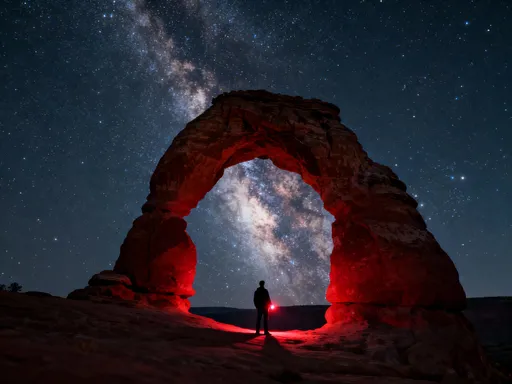
As the sun dips behind the La Sal Mountains, Arches National Park undergoes a quiet transformation. The searing heat of the day gives way to a gentle coolness that wraps around visitors like a welcome embrace. The red rock formations, glowing amber and rust in daylight, deepen into rich, shadowed silhouettes. Delicate Arch, North Window, and Turret Arch no longer stand merely as geological wonders—they become gateways to another dimension, framed by a sky that grows ever darker and more infinite. This is when the desert truly comes alive, not with noise, but with presence.
One of the reasons Arches is exceptional for night viewing lies in its location. Nestled near Moab, Utah, the park sits far from major urban centers, minimizing artificial light. Its high desert elevation and typically clear skies create ideal conditions for stargazing. The National Park Service has worked diligently to reduce light pollution within park boundaries, earning Arches designation as an International Dark Sky Park. This recognition is not merely symbolic—it means the Milky Way appears in vivid detail, planets shine with startling clarity, and even faint galaxies like Andromeda can be glimpsed with the naked eye on the darkest nights.
The Starlight Festival is not a commercialized concert or a crowded festival with vendors and stages. Instead, it is a carefully curated, ranger-led experience designed to deepen visitors’ connection to the night sky and the natural world. Events are intentionally low-key, emphasizing reverence over entertainment. There are no amplified sounds, no flashing lights—just the crunch of gravel underfoot, the whisper of wind through canyon walls, and the occasional call of a distant owl. This deliberate simplicity allows the true stars of the event—the cosmos themselves—to take center stage.
What the Starlight Festival Actually Offers
The heart of the Starlight Festival lies in its programming, which balances education, exploration, and quiet reflection. Guided night hikes are among the most popular offerings. Led by experienced park rangers, these walks take visitors along established trails, where every step is illuminated only by the soft glow of red-light headlamps. Rangers pause frequently to point out celestial landmarks—Orion’s Belt, the Big Dipper, or the slow arc of the Milky Way—while also interpreting the geology and ecology of the landscape beneath the stars.
Telescope viewing sessions provide an even closer look at the heavens. Volunteers from local astronomy clubs set up high-powered telescopes at designated viewing areas, offering glimpses of Jupiter’s swirling clouds, Saturn’s rings, and distant nebulae. These sessions are staffed by knowledgeable amateurs and scientists who explain what visitors are seeing in clear, accessible language. No prior astronomy knowledge is required—curiosity is the only prerequisite.
Astronomy talks are held in the park’s amphitheater or visitor center, where rangers and guest speakers discuss topics ranging from the life cycle of stars to the science of light pollution. These presentations are designed to be engaging for all ages, with visuals, models, and real-time sky maps. Families with children find these talks especially rewarding, as they spark wonder and encourage questions about the universe.
For younger visitors or those seeking a more immersive experience, the festival includes constellation storytelling. Using simple laser pointers and traditional narratives, rangers share how different cultures have interpreted the patterns in the sky. These stories, drawn from Indigenous, Greek, and other global traditions, add a human dimension to the night, connecting ancient wisdom with modern observation. Additionally, infrared camera demonstrations allow guests to see nocturnal wildlife—such as desert foxes or kangaroo rats—without disturbing their natural behavior, offering a rare glimpse into the hidden life of the park after dark.
When and How to Plan Your Visit
Timing is essential when planning a trip to the Starlight Festival. The event typically takes place in late spring or early fall, when daytime temperatures are more moderate and nighttime skies are clearest. These shoulder seasons avoid the scorching heat of summer and the unpredictable weather of winter, making for a more comfortable and enjoyable experience. Exact dates vary from year to year, so it is crucial to consult the official National Park Service website for the most up-to-date information.
Attendance at the festival may be limited to protect the fragile desert environment and ensure a high-quality experience for all visitors. Some programs require advance registration, particularly the guided night hikes and telescope sessions. Spaces fill quickly, so early planning is strongly recommended. The park service often releases event details several months in advance, allowing families and individuals to coordinate travel, lodging, and park entry.
Because parking within the park is limited, especially at night, visitors are advised to arrive early in the day. This not only secures a parking spot but also allows time to explore popular daytime trails such as the Devil’s Garden or the trail to Double Arch. Arriving early also helps visitors acclimate to the altitude and terrain, reducing the risk of fatigue during evening activities. Those staying in Moab, the nearest town, should plan for a short drive to the park entrance and allow extra time for potential delays during peak festival hours.
Public transportation options are limited, so most attendees drive to the park. Carpooling is encouraged to minimize traffic and environmental impact. The park service sometimes partners with local shuttle services during major events, so checking for available transit options in advance can simplify logistics. Regardless of how you arrive, patience and preparation are key to a smooth and rewarding visit.
Be Prepared: What to Bring (and Skip)
Preparation is a vital part of enjoying the Starlight Festival to its fullest. The desert climate can be unpredictable, with temperatures dropping significantly after sunset. Visitors should pack warm layers, including a jacket, hat, and gloves, even if the day was hot. Sturdy, closed-toe shoes are essential for walking on uneven terrain, particularly during night hikes when visibility is low.
A red-light headlamp is perhaps the most important item to bring. Unlike white light, which disrupts night vision and affects others’ ability to see the stars, red light preserves dark adaptation. Most ranger-led programs require the use of red-light sources, and many vendors in Moab sell affordable headlamps that meet park guidelines. Bringing extra batteries is also wise, as electronic devices can drain quickly in cold conditions.
Hydration is just as important at night as during the day. The dry desert air can lead to dehydration, even in cooler temperatures, so carrying a water bottle is essential. Snacks such as nuts, energy bars, or fruit can help maintain energy during longer programs. However, visitors should avoid strong-smelling foods that might attract wildlife and always pack out all trash.
There are also important items to leave behind. Bright white flashlights, uncovered phone screens, and laser pointers are strictly discouraged. Even brief exposure to white light can ruin the night vision of nearby guests and diminish the stargazing experience for everyone. If using a phone, enable night mode or cover the screen with red cellophane. Drones are prohibited within national parks, including Arches, to protect wildlife and preserve the natural soundscape. Pets, while beloved companions, must also stay home—they are not allowed on trails or in most festival areas to prevent disturbance to animals and other visitors.
Beyond the Festival: Hidden Gems Nearby
While the Starlight Festival is a highlight, the magic of Arches extends well beyond the scheduled events. For those arriving early or staying an extra day, several lesser-known areas within the park offer profound beauty at sunset or twilight. The Windows Section, featuring North and South Windows and Turret Arch, is especially striking in the golden hour, when the sun casts long shadows and highlights the curves of the sandstone. This area is more accessible than Delicate Arch and often less crowded, making it ideal for families or those seeking a quieter moment.
Balanced Rock, a massive boulder perched atop a narrow pedestal, is another must-see, particularly as the sun sets behind it. A short, paved loop trail circles the formation, making it suitable for visitors of all ages and mobility levels. The contrast between the darkening sky and the illuminated rock creates a dramatic scene that many photographers cherish.
Outside the park, the town of Moab serves as a practical base for supplies, meals, and rest. Local-run establishments such as Moab Diner, Desert Baking Company, and Poison Spider Books offer reliable food, coffee, and last-minute essentials. These businesses are accustomed to serving park visitors and often share helpful tips about current trail conditions or weather forecasts. For those interested in regional history, the Moab Museum provides insight into the area’s geology, Indigenous cultures, and early settlement.
It’s also worth noting that the night sky in Arches is spectacular any time of year. If the festival dates don’t align with your travel plans, consider planning your own stargazing outing. The park remains open until 10 p.m., and the pullouts along the main road offer excellent vantage points. New Moon periods—when the sky is darkest—are particularly ideal. Checking a lunar calendar before your trip can help maximize your chances of witnessing a sky full of stars.
Why This Experience Stands Out
In an era of crowded attractions and overstimulating experiences, the Starlight Festival is a refreshing exception. Unlike large-scale national park events that feature concerts, food trucks, and long lines, this gathering prioritizes stillness, learning, and connection. There is no rush, no agenda beyond observation and understanding. This calm, intentional atmosphere allows visitors to slow down and truly absorb the magnitude of what they are witnessing.
Seeing the Milky Way stretch across the sky from beneath an ancient stone arch is an experience that defies description. It evokes a sense of smallness—not in a frightening way, but in a deeply grounding one. You are reminded that you are part of something vast, ancient, and beautifully ordered. The arches, formed over millions of years, stand as silent witnesses to cosmic time. In their presence, human concerns shrink, and a deeper perspective emerges.
Equally important is the festival’s role in dark sky preservation. Light pollution is a growing problem worldwide, with more than 80% of people unable to see the Milky Way from their homes. Events like the Starlight Festival raise awareness about the value of natural darkness—not just for stargazing, but for wildlife, human health, and cultural heritage. By participating, visitors become advocates for responsible lighting and the protection of wild places where the night sky remains intact.
Making It Your Own: Tips for a Meaningful Visit
To fully embrace the spirit of the Starlight Festival, consider approaching it not as a checklist of activities, but as a journey of presence. Allow yourself moments of silence—sit on a rock, breathe deeply, and simply look up. Let the scale of the desert night wash over you. In a world that rarely asks us to pause, this act of stillness is itself revolutionary.
While photographs can capture the beauty of the stars, they often fail to convey the emotional impact of being there. Instead of relying solely on your camera, try journaling or sketching what you see and feel. Even a few lines about the temperature, the color of the sky, or the sound of the wind can preserve the memory in a more personal way. These small acts of reflection deepen your connection to the experience and help carry it with you long after you leave.
Finally, remember that your presence in this fragile ecosystem matters. Follow Leave No Trace principles: stay on designated trails, avoid touching rock surfaces or desert plants, and pack out everything you bring in. The arches and the night sky are not resources to be consumed, but treasures to be respected. By treading lightly and leaving no trace, you help ensure that future generations can stand beneath the same stars and feel the same awe.
The Starlight Festival at Arches National Park is more than an event—it is an invitation to wonder, to learn, and to reconnect with the natural world. In a single night beneath the cosmos, you may find a new perspective, a deeper peace, and a renewed commitment to protecting the quiet magic of our planet. If you’ve ever looked up and felt small in the best possible way, this is your moment. The stars are waiting.