You Won’t Believe These Hidden Corners of Galway’s Urban Soul
Have you ever walked through a city and felt like it was whispering secrets just for you? That’s Galway. Beyond the crowded lanes and busking corners, its quiet alleys, tucked-away courtyards, and overlooked nooks hold a rhythm all their own. This isn’t just a travel guide—it’s an invitation to feel the city, not just see it. I’ll take you where maps don’t, into the real urban pulse of Galway. Here, history isn’t locked behind glass; it’s in the curve of a cobblestone lane, the echo of footsteps on a stone archway, the scent of coffee drifting from a doorway no tourist has yet discovered. This is a city that rewards curiosity, where every turn reveals a moment of stillness, a burst of color, or a glimpse into daily life unfolding quietly beneath the surface.
The Beating Heart of Galway: More Than Just a Map
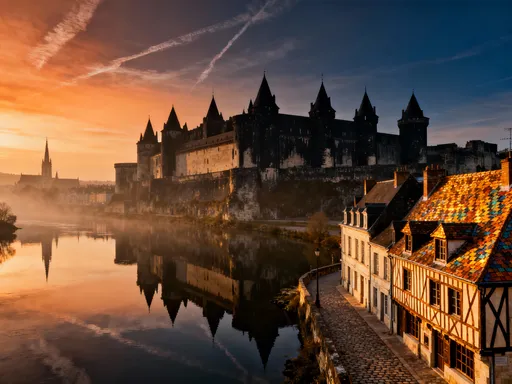
Galway is often introduced through its most vibrant postcard images—Shop Street pulsing with musicians, the medieval spire of St. Nicholas’ Church rising above red-brick rooftops, the wide-open space of Eyre Square where pigeons scatter at the clatter of passing feet. These landmarks are real, beloved, and undeniably central. But they are only one layer of a city that breathes far beyond its tourist façade. The true essence of Galway lies not in what is marked on maps, but in the unmarked thresholds, the back lanes, and the spaces between buildings where life unfolds without performance. This is a city shaped by centuries of tides, trade, and community—a living organism where each alley and doorway tells a story of continuity and change.
To understand Galway’s urban soul, one must first recognize that cities are not just collections of buildings. They are emotional landscapes, shaped as much by memory and routine as by architecture. For locals, the city’s rhythm is found in the morning walk to the bakery, the shortcut through a narrow passage behind the post office, the bench by the river where a grandfather watches swans glide by. These moments form an invisible map—one passed down not in guidebooks, but in habit and affection. The power of such spaces lies in their authenticity: they are not curated for visitors, but lived in, worn smooth by time and use.
What makes Galway particularly special is how it balances visibility with concealment. The city welcomes crowds, yet guards its quiet corners fiercely. While Shop Street buzzes with energy, just a few steps away, silence descends in a cobbled courtyard where ivy creeps over ancient stone. This duality is not accidental. It reflects a deep cultural respect for both celebration and contemplation. The Irish have long valued the notion of ‘meitheal’—community cooperation—and this spirit infuses Galway’s urban design. Spaces are built not just for function, but for connection. Whether it’s a shared garden tucked behind a row of townhouses or a small park where children play beneath a bronze statue, these areas serve as quiet anchors in the city’s flow.
Whispers in the Stone: Hidden Courtyards and Forgotten Passages
Some of Galway’s most profound experiences come not from grand monuments, but from its hidden courtyards and forgotten passageways. These are the places where the city exhales. Take, for example, the secluded courtyard behind St. Nicholas’ Collegiate Church. While visitors stream through the church’s main entrance, few notice the narrow archway to the side that opens into a walled garden of hushed stillness. Here, stone benches sit beneath yew trees, their branches heavy with age. The air carries the scent of damp earth and old stone. It is a place of pause, of reflection—a sanctuary carved into the city’s heart. No signs direct you here. No tour groups gather. Yet it exists, enduring, as it has for generations.
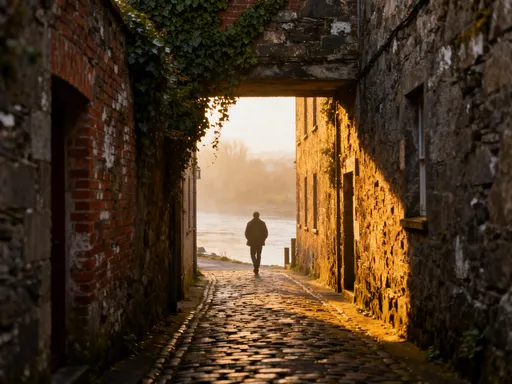
Another such space is Church Lane, a slender passage that connects Middle Street to the cathedral grounds. Lined with weathered stone walls and dotted with climbing roses in summer, this lane feels like a secret shared between the city and those who wander slowly. The cobblestones are uneven, worn down by centuries of footsteps. At one end, a wrought-iron gate peeks through ivy, leading to a private residence whose history is whispered in local lore. The lane’s quiet is not emptiness—it is presence. It holds the echo of conversations past, the laughter of children long grown, the rustle of a cat darting between shadows. These are the textures of urban life that survive beyond headlines and hashtags.
Middle Street itself, though more accessible, remains overlooked by most tourists. Once a hub of artisan workshops and family-run shops, it now hosts a mix of quiet residences and small businesses. But its charm lies in its slowness. Sunlight filters through narrow gaps between buildings, casting long shadows in the late afternoon. A lone bench sits beneath a sycamore tree, occupied most mornings by an elderly woman who reads the paper with a thermos of tea. This is not performance. This is life. These lanes and courtyards matter because they resist commodification. They are not designed for Instagram. They exist simply because they always have—and because the city, in its wisdom, allows them to remain.
River Corrib: The Quiet Backbone of the City
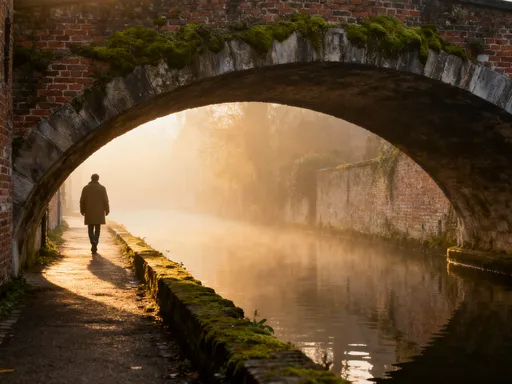
The River Corrib is Galway’s quiet backbone—constant, flowing, and deeply woven into the city’s identity. While many visitors flock to the Claddagh or the Latin Quarter, fewer trace the river’s path beyond the well-trodden banks. Yet it is along these quieter stretches that the city reveals a different tempo. The river does not rush. It meanders, carving its way through rock and memory, shaping not just the landscape but the soul of those who live beside it. Its presence is felt in the cool breeze off the water, the cry of gulls at dawn, the rhythmic churn of the Salmon Weir Bridge, where the current quickens before spilling into Galway Bay.
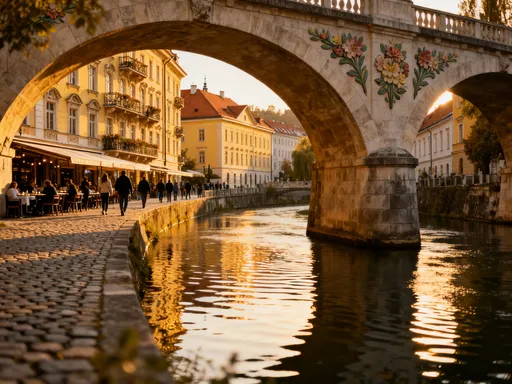
One of the most peaceful access points is the path near the Salmon Weir Bridge, just a short walk from the city center. Here, the sounds of traffic fade, replaced by the soft gurgle of water over stone. Benches line the walkway, many occupied by locals who come to watch the salmon leap during spawning season. The bridge itself is an engineering marvel from the 19th century, its stone arches standing firm against time. But it is not the structure alone that draws people—it is the feeling of continuity, of being part of a cycle much larger than oneself. Parents bring children to see the fish jump; artists set up easels to capture the light on the water; elderly couples sit side by side, speaking little, simply enjoying the flow.
Further downstream, on Nun’s Island, the riverbanks open into a network of quiet trails and hidden seating areas. This area, once home to a Dominican nunnery, retains a sense of serenity. Tall willows dip into the water, their reflections shimmering in the current. Birdsong fills the air—robins, blackbirds, the occasional kingfisher darting past. It is easy to forget, in this place, that you are still within city limits. Yet that is part of Galway’s genius: it allows nature and urban life to coexist without conflict. The River Corrib is not a backdrop. It is a participant. It shapes daily routines, inspires art, and offers a space for quiet contemplation in a world that rarely slows down.
Art in the Cracks: Street Murals and Spontaneous Creativity
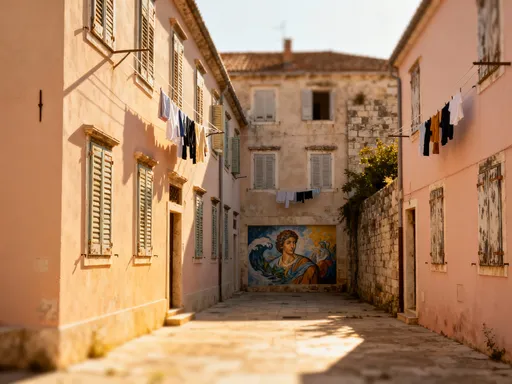
Galway’s creative spirit does not confine itself to galleries or theaters. It spills into the streets, not as spectacle, but as conversation. Look closely, and you’ll find art in the cracks—on side walls, in alleyways, on the backs of forgotten buildings. These are not commissioned installations with plaques and press releases. They are organic expressions of identity, resistance, and hope. One of the most dynamic spaces for such art is Augustinian Lane, a narrow passage off Eyre Square that has become a rotating canvas for local and visiting artists. What was once a blank wall is now a mosaic of color and message—some pieces political, others poetic, many deeply personal.
The murals here change with the seasons. A winter piece might depict a swan rising from water, symbolizing resilience. A summer mural could celebrate the Galway Races with a burst of horses and silks. None are permanent, and none are meant to be. Their impermanence is part of their power. They reflect the city’s mood, its concerns, its dreams. Unlike tourist-oriented street art in other cities, these works are not sanitized or commercialized. They are raw, sometimes messy, always honest. A teenager might paint a tribute to a lost friend. A community group might use the wall to call for environmental action. The space belongs to no one and everyone at once.
Near the Galway Market, side walls carry layers of graffiti, stencils, and hand-painted slogans in both English and Irish. Some are humorous; others are solemn. One reads, “Is breá liom Gaillimh”—I love Galway—in looping script. Another shows a mermaid with Galway’s skyline behind her, a nod to the city’s maritime soul. These expressions are not vandalism. They are dialogue. They turn blank surfaces into storytelling spaces, where the city speaks to itself and to those who listen. For the observant traveler, these walls offer a deeper understanding of Galway than any museum could—revealing its heart through color, line, and word.
The Pulse of Daily Life: Markets, Cafés, and Community Hubs
To feel Galway’s rhythm, one must step into its daily life. And few places capture this better than the Galway Market at St. Nicholas’ Church. Every weekend, the square transforms into a vibrant tapestry of scent, sound, and color. Local farmers sell fresh goat cheese and sourdough bread. Artisans display hand-thrown pottery and woolen scarves dyed with natural pigments. Musicians play in corners, their tunes blending with the hum of conversation. But the market is not a performance for tourists. It is a genuine gathering—a place where neighbors meet, recipes are exchanged, and children run between stalls with jam sandwiches in hand.
What makes the market special is its authenticity. Vendors are not selling souvenirs. They are sharing their craft, their harvest, their passion. A woman from Connemara sells seaweed harvested from her family’s coastline, explaining its health benefits with quiet pride. A beekeeper offers raw honey in recycled jars, his hands rough from work. These interactions are not transactional. They are relational. They embody the Irish tradition of hospitality—of welcoming the stranger as family. For visitors, the market is not just a place to buy, but to belong, even if only for an hour.
Equally revealing are the low-key cafés where locals gather. Tucked away near the Cornstore or along William Street, these spots are unassuming—no neon signs, no menus in five languages. Inside, the air is warm with the scent of coffee and toast. Wooden tables bear the marks of years of use. Regulars are greeted by name. Conversations drift between politics, weather, and the latest hurling match. These cafés are not destinations. They are rituals. They represent the quiet architecture of community—the places where life is lived, not performed. To sit in one is to understand that Galway’s soul is not in its monuments, but in its moments.
Green Threads in the Urban Fabric: Parks and Pocket Gardens
Amid the stone and brick, Galway weaves in threads of green—small parks, hidden gardens, and riverside trails that offer balance and respite. These spaces are not grand in scale, but they are vital in spirit. One such place is the riverside stretch of Salthill Promenade beyond the main path. While most tourists stop at the iconic “Black Rock” or the colorful bathing boxes, few continue westward, where the path narrows and the city fades behind. Here, the Atlantic wind sweeps in unfiltered, and the only sounds are waves and gulls. Benches appear at intervals, placed thoughtfully to face the horizon. This is where locals come to walk dogs, read books, or simply breathe.
Another hidden gem is Wellpark, a small public garden tucked behind the city library. Unlike formal parks with manicured lawns, Wellpark feels wilder, more intimate. Native plants grow in clusters—foxgloves, primroses, ferns. Bird feeders hang from trees, attracting robins and wrens. A small pond hosts frogs and dragonflies in summer. The park is used for quiet gatherings—yoga at dawn, storytelling for children, the occasional poetry reading. Its design is simple, but intentional: winding paths encourage slow movement; benches are placed in clusters and solitude, allowing for both connection and retreat.
These green spaces matter because they are not afterthoughts. They are essential to the city’s livability. Urban planners in Galway have long understood that nature is not separate from the city—it is part of it. This is evident in the integration of planters along sidewalks, the preservation of mature trees during redevelopment, and the expansion of bike lanes that connect green corridors. These details may seem minor, but they shape daily experience. They invite pause. They offer calm. They remind residents and visitors alike that even in the heart of the city, there is room for growth, for stillness, for life.
Designing Connection: How Galway Balances Old and New
One of Galway’s greatest strengths is its ability to honor the past while embracing the present. This balance is not always easy, but the city approaches it with care. Historic buildings are preserved not as museum pieces, but as living spaces—homes, shops, studios. At the same time, modern interventions are designed to complement, not dominate. Pedestrian zones, introduced to reduce traffic and enhance walkability, have transformed areas like Middle Street and Dominic Street into spaces of human scale. Benches, lighting, and public art are added thoughtfully, inviting people to linger rather than rush through.
The city’s approach to public seating is particularly telling. Benches are not placed randomly. They are positioned to face views—the river, a garden, a street performance. They are built to last, often from reclaimed wood or local stone. Some are even designed with slight curves, encouraging conversation. This attention to detail reflects a deeper philosophy: that urban space should foster connection. It is not enough for a city to be functional. It must also be humane.
What makes Galway’s urban design work is its emphasis on intimacy and surprise. Narrow lanes open into courtyards. Walls give way to murals. Quiet benches appear where least expected. These moments of discovery are not accidents. They are the result of planning that values emotion as much as efficiency. The city does not seek to impress with scale or spectacle. It seeks to resonate. It understands that people are drawn not just to beauty, but to belonging. And in that understanding, Galway reveals its true soul—not in the grand gesture, but in the quiet detail, the overlooked corner, the space between.
Galway’s magic isn’t just in its music or stone walls—it’s in the spaces between. The true city reveals itself slowly, in quiet corners and shared moments. By seeking out these hidden layers, we don’t just visit—we connect. Let this be your call to wander deeper, look closer, and let the urban soul of Galway find you.