How I Found Calm: Simple Qigong Moves That Quiet the Mind
Feeling overwhelmed by stress and mental noise? You're not alone. Modern life constantly pulls us in every direction, leaving little room for inner peace. I discovered that ancient qigong practices—especially those focused on mental balance—can bring real, noticeable relief. This isn’t about magic or instant fixes. It’s about consistent, gentle techniques that help retrain your mind and body. In this article, I’ll share practical qigong-based psychological regulation methods that have genuinely transformed my daily calm and focus.
The Hidden Cost of Mental Overload
In today’s fast-paced world, mental overload has become a silent epidemic. Many women between 30 and 55 report feeling mentally exhausted, even when their physical health is sound. The constant demands of family, work, and personal responsibilities create a background hum of anxiety that’s easy to ignore—until it begins to affect sleep, digestion, and emotional stability. What many don’t realize is that this chronic mental strain isn’t just psychological; it has tangible effects on the body’s energy systems. According to Traditional Chinese Medicine (TCM), emotional stress disrupts the smooth flow of Qi, the vital energy that sustains health and balance.
When Qi becomes blocked or unbalanced—often due to prolonged worry, frustration, or overthinking—it can manifest as fatigue, irritability, headaches, or even digestive discomfort. Unlike acute stress, which the body can recover from quickly, chronic mental overload wears down resilience over time. This kind of stress doesn’t always come from dramatic events; it accumulates in the small moments—rushing to prepare school lunches, managing household budgets, or lying awake at night replaying conversations. The body remains in a low-grade state of alert, keeping the nervous system activated without full awareness.
Conventional relaxation methods like watching television, scrolling through social media, or even intense workouts often fail to address this deeper layer of mental fatigue. These activities may provide temporary distraction, but they don’t restore the nervous system to a true state of rest. In fact, screen-based relaxation can add to sensory overload, making it harder to quiet the mind. What’s needed is a practice that directly calms the mind while gently supporting the body’s natural rhythms. This is where qigong offers a powerful, accessible solution—rooted in centuries of observation and refinement.
Qigong and the Mind-Body Connection
Qigong is an ancient system of self-care that integrates gentle movement, conscious breathing, and mindful awareness to support overall well-being. Unlike high-intensity fitness routines or passive relaxation techniques, qigong works at the intersection of physical and mental health. Its strength lies in its simplicity and adaptability, making it ideal for women juggling multiple roles and responsibilities. The practice is not about building muscle or burning calories; it’s about cultivating inner awareness and restoring balance to the body’s energy flow.
At the heart of qigong’s psychological benefits is its ability to regulate the autonomic nervous system. Through slow, rhythmic movements coordinated with deep breathing, practitioners activate the parasympathetic nervous system—the body’s natural “rest and digest” mode. This counters the overactive “fight or flight” response that so many experience in daily life. Over time, regular practice helps retrain the body to return to calm more easily, even in the face of stress.
What sets qigong apart from other forms of exercise is its emphasis on internal focus. While yoga and tai chi share some similarities, qigong places particular importance on intention and subtle energy awareness. Movements are performed not for their physical effect alone, but as a way to guide Qi through the body. This mindful engagement creates a meditative state without requiring stillness or complex meditation techniques—making it especially accessible for those who find traditional meditation difficult.
The beauty of qigong lies in its natural pacing. There is no need to push, strain, or achieve a certain level of performance. Instead, the practice encourages listening to the body, moving with grace, and breathing with purpose. This gentle approach is not only sustainable over time but also deeply nurturing—particularly for women navigating hormonal shifts, parenting pressures, or career transitions.
Why Psychological Regulation Matters in Qigong Practice
While qigong is often associated with physical health—such as improving balance, flexibility, or circulation—its most profound benefits may lie in the realm of psychological regulation. Emotional turbulence, such as persistent worry, mood swings, or difficulty concentrating, can be signs of disrupted Qi flow. In Traditional Chinese Medicine, each organ system is linked to specific emotions; for example, the liver is associated with anger and frustration, while the heart relates to joy and mental clarity. When these systems are out of balance, emotional regulation becomes more difficult.
Modern science supports this mind-body connection. Studies have shown that mind-body practices like qigong can reduce levels of cortisol, the primary stress hormone, while increasing heart rate variability—a marker of resilience and emotional flexibility. These physiological changes translate into real-life improvements: better sleep, improved mood, and greater capacity to handle daily challenges without becoming overwhelmed. Psychological regulation, in this context, is not about suppressing emotions, but about creating space between stimulus and response—allowing for more thoughtful, calm reactions.
For women in midlife, this kind of emotional stability is invaluable. Hormonal fluctuations during perimenopause and menopause can amplify mood sensitivity, making it harder to maintain a sense of inner calm. Qigong offers a non-invasive, drug-free way to support emotional balance during these transitions. By cultivating awareness of breath, movement, and mental patterns, practitioners learn to recognize early signs of stress and intervene before they escalate.
Moreover, psychological regulation through qigong is not a quick fix but a long-term investment in vitality. Just as physical exercise strengthens the body over time, consistent qigong practice strengthens the mind’s ability to remain centered. This resilience doesn’t eliminate life’s challenges, but it changes how we experience them—transforming reactivity into responsiveness, and chaos into clarity.
The Foundation: Breath as an Anchor
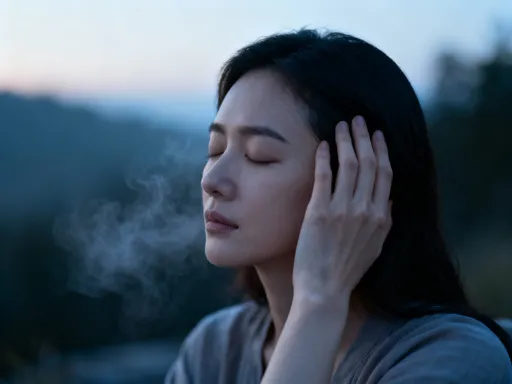
One of the most powerful tools in qigong for psychological regulation is the breath. Unlike the shallow, rapid breathing that often accompanies stress, diaphragmatic breathing—also known as belly breathing—activates the body’s natural relaxation response. This simple technique forms the foundation of nearly all qigong practices and can be used anytime, anywhere, to restore calm.
To practice diaphragmatic breathing, sit or stand in a comfortable position with your spine straight but relaxed. Place one hand on your chest and the other on your lower abdomen. Inhale slowly through your nose, allowing your belly to rise as your lungs fill from the bottom up. Your chest should remain relatively still. Exhale gently through your mouth or nose, feeling the abdomen fall inward. Aim for a smooth, continuous rhythm—inhaling for about four counts, pausing briefly, and exhaling for six to eight counts. The extended exhale is key, as it signals the nervous system to relax.
This form of breathing directly stimulates the vagus nerve, a major component of the parasympathetic nervous system. As the vagus nerve is engaged, heart rate slows, blood pressure decreases, and mental chatter begins to quiet. Many women report feeling a shift within just a few minutes—tension in the shoulders eases, the mind feels clearer, and emotions stabilize. The beauty of this technique is its immediacy; it can be used during a heated conversation, before a doctor’s appointment, or while waiting in the school pickup line.
Integrating breath awareness into daily life doesn’t require long sessions. Even three to five minutes in the morning and evening can create lasting changes. Some find it helpful to pair breathing practice with a routine activity—such as brewing tea, folding laundry, or waiting for the kettle to boil. Over time, the breath becomes a reliable anchor, a point of return when the mind feels scattered. With consistent practice, this simple act of conscious breathing builds a deeper sense of self-awareness and emotional control.
Movement with Awareness: Gentle Qigong Forms for Mental Clarity
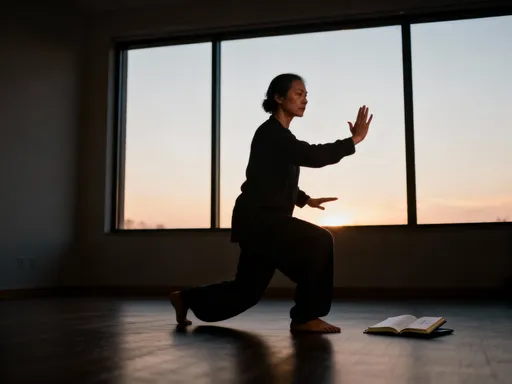
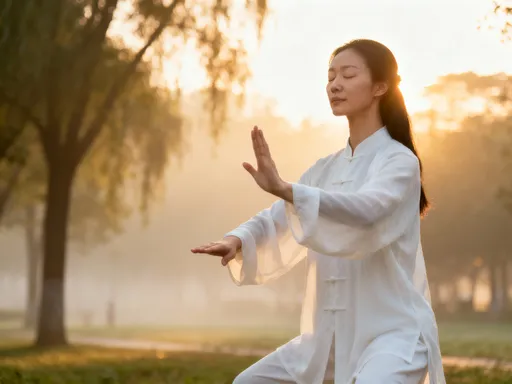
While breath is foundational, movement is equally important in qigong for calming the mind. Specific forms—gentle, repetitive sequences—are designed to harmonize body and mind. Two of the most accessible and effective for psychological regulation are “Lifting the Sky” and “Separating Heaven and Earth.” These movements are low-impact, require no special equipment, and can be performed in a small space, making them ideal for home practice.
“Lifting the Sky” begins with feet shoulder-width apart, knees slightly bent. Hands start at the sides, palms facing down. As you inhale, slowly raise your arms in front of you, then overhead, turning the palms to face the sky. Imagine you are lifting a light, glowing sphere above your head. At the top of the motion, gently stretch upward through the spine. As you exhale, slowly lower your arms back down, palms turning inward as they pass in front of the face, returning to the starting position. The movement should be fluid, almost dreamlike, with full attention on the sensation of lifting and releasing.
This form encourages mental spaciousness. The upward motion symbolizes release—letting go of tension, worry, or mental clutter. The downward motion represents grounding, bringing awareness back to the body and the present moment. Repeating this sequence 6 to 9 times creates a rhythmic flow that calms the nervous system and clears the mind. Many practitioners report feeling a sense of lightness and clarity afterward, as if mental fog has lifted.
“Separating Heaven and Earth” involves one hand rising while the other lowers, then switching sides. Stand in the same posture, hands at the lower abdomen. Inhale as the left hand rises slowly in front of the body, palm facing up, as if cradling energy from the earth. At the same time, the right hand moves down along the side of the body, palm facing down, as if pressing energy into the ground. At the top and bottom of the motion, pause briefly. Exhale as you switch sides. This alternating pattern continues for several repetitions.
This form promotes balance—between effort and ease, activity and rest, internal and external. It helps regulate the body’s energy channels and supports emotional equilibrium. The coordination of breath, movement, and attention creates a moving meditation, redirecting focus away from anxious thoughts and into the present. For women who feel pulled in multiple directions, this practice offers a symbolic and physical return to centeredness.
Mental Focus Techniques: Cultivating Inner Stillness
Beyond breath and movement, qigong emphasizes mental focus as a key component of psychological regulation. Stillness is not achieved by stopping thoughts, but by shifting attention to a steady point of awareness. Two powerful techniques for this are visualization and dantian focus.
The lower dantian, located about two inches below the navel, is considered in qigong the body’s energy center. Focusing attention here—without straining—helps anchor the mind and stabilize emotions. To practice, close your eyes gently and bring your awareness to this area. Imagine it as a warm, quiet space. As thoughts arise, acknowledge them without judgment and return your focus to the dantian. This is not about emptying the mind, but about cultivating a stable inner reference point.
Visualization is another effective tool. During breathing or movement practice, imagine a soft, warm light gathering in the lower dantian with each inhale, expanding slightly with each exhale. This mental image helps direct attention inward and supports the flow of Qi. Some women find it helpful to imagine this light spreading to areas of tension—such as the shoulders or forehead—bringing warmth and relaxation.
It’s important to approach these techniques with patience. Stillness is not forced; it emerges naturally through consistent practice. There will be days when the mind is busy, and that’s okay. The goal is not perfection, but presence. Over time, this practice strengthens the ability to observe thoughts without being carried away by them—a skill that translates into greater emotional resilience in daily life.
Building a Sustainable Routine: From Practice to Habit
The key to experiencing the full benefits of qigong lies in consistency, not duration. Even five to ten minutes a day can make a meaningful difference when practiced regularly. The challenge for many women is finding the time and motivation to begin—and to keep going. The solution is to integrate qigong into existing routines, treating it not as an extra task, but as a form of self-care as essential as brushing teeth or preparing a meal.
A morning practice of breath and “Lifting the Sky” can set a calm tone for the day. Performing just three rounds upon waking—before checking the phone or opening the laptop—helps establish mental clarity and intention. A midday reset, even if only three minutes long, can prevent stress from accumulating. Standing quietly in the kitchen or stepping outside for a brief session of “Separating Heaven and Earth” can restore focus during a busy workday.
In the evening, a gentle wind-down routine supports relaxation and better sleep. Combining diaphragmatic breathing with dantian focus for five to ten minutes helps transition the body from activity to rest. This practice can be done in bed, in a comfortable chair, or even while sitting with a cup of herbal tea. Over time, the body begins to associate these movements and breath patterns with safety and calm, making it easier to unwind.
Common obstacles include lack of time, self-doubt, or unrealistic expectations. It helps to start small—just one technique, one minute at a time. Tracking subtle changes in mood, energy, or sleep can reinforce motivation. Journaling brief notes—such as “felt calmer after breathing practice” or “noticed less jaw tension today”—builds awareness of progress. Over weeks and months, these small shifts accumulate into lasting transformation.
Conclusion: A Lifelong Journey Toward Inner Balance
Finding calm in the midst of life’s demands is not a luxury—it’s a necessity for long-term well-being. The qigong practices shared in this article are not quick fixes, but gentle, sustainable tools for psychological regulation. By integrating breath, movement, and mindful focus into daily life, women can reclaim a sense of inner balance and resilience. These techniques are not about escaping stress, but about changing the relationship to it—responding with awareness rather than reacting from habit.
The journey of qigong is one of self-discovery and empowerment. Each practice, no matter how brief, is an act of self-respect—an acknowledgment that mental peace is worth nurturing. Over time, the benefits extend beyond the individual, influencing family dynamics, work performance, and overall quality of life. A calmer mother, partner, or professional creates a ripple effect of stability and compassion.
As with any health practice, it’s important to consult with a healthcare provider if you have underlying medical conditions. Qigong is a complementary approach, not a substitute for professional treatment. However, for those seeking a natural, accessible way to support mental clarity and emotional balance, qigong offers a time-tested path. Begin where you are, use what you have, and take one gentle step at a time. The journey to inner calm is not about perfection—it’s about presence, patience, and the quiet courage to return to yourself, again and again.